Sep 15, 2026News & Insights
Youth E-Moto Import Requirements: A Distributor's Checklist
Youth e-moto import requirements for US and EU distributors: classification, battery shipping, and what to ask a kids electric dirt bike manufacturer.
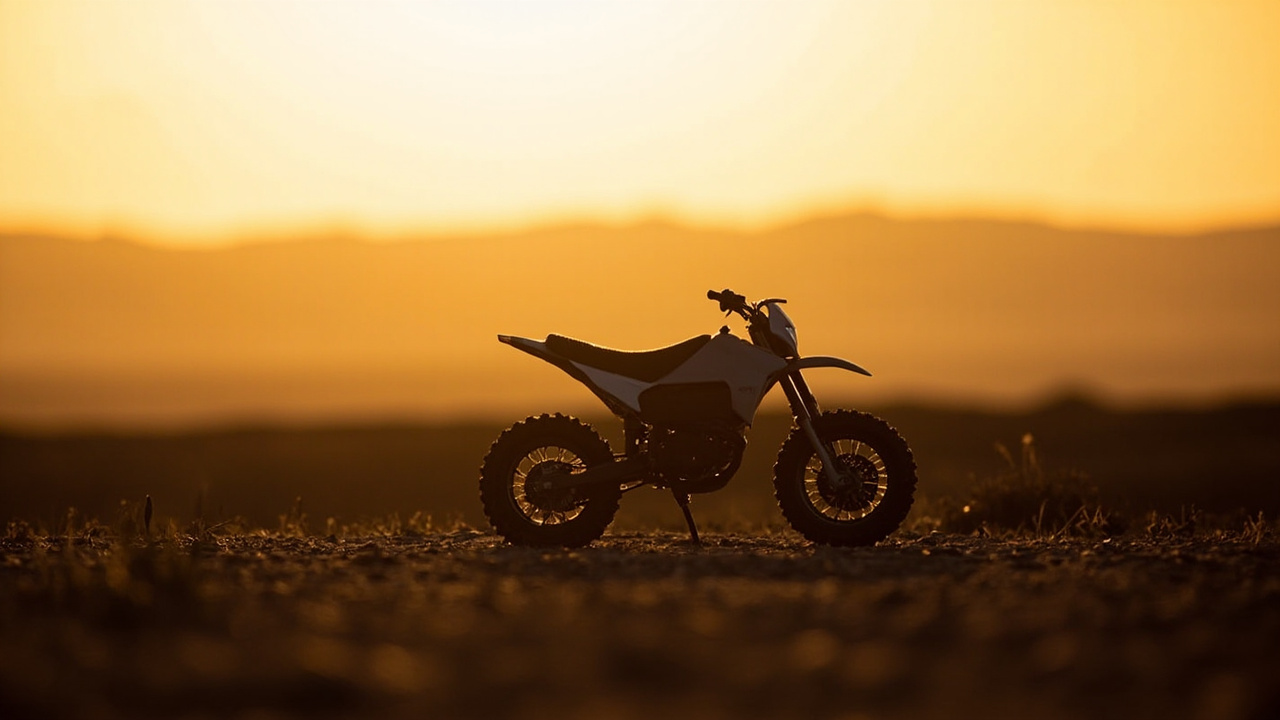
WHY YOUTH E-MOTO IMPORT REQUIREMENTS ARE A DIFFERENT PROBLEM
Distributors who already move adult electric motorcycles or e-bikes into the US and EU are used to a familiar playbook. A youth off-road e-moto like the Y-110 — a 250 W or 350 W geared or gearless machine on a 36 V lithium battery, with a top speed of 25 km/h and three riding modes (pure electric, pedal-assist, pedal-only) — does not slot into that playbook. The same bike can land in three different regulatory boxes depending on the destination market: a children's toy under a toy-safety framework, a general consumer product under a product-safety framework, or a motor vehicle or L-category vehicle under road-traffic law. The label you put on the box, the documents you ship with it, and the questions your customs broker asks all follow from that first classification call. This guide walks distributors and brand buyers through the youth e-moto import requirements they need to lock down before they place a wholesale order.
THE CATEGORY-DRIFT PROBLEM: TOY, CONSUMER PRODUCT, OR MOTOR VEHICLE
Three regulatory boxes, three document sets
If the destination market treats the unit as a toy, you are looking at a toy-safety framework such as EN 71 in Europe or the Consumer Product Safety Improvement Act framework in the United States. If the destination market treats it as a general consumer product, the relevant product-safety statutes apply and the test reports change accordingly. If the destination market treats it as a motor vehicle or L-category vehicle, registration, type approval, and rider licensing enter the picture. The same physical bike can fall into any one of these boxes. The line is drawn by speed, power, intended use, and where the rider is allowed to take it, not by what the importer wants to call it.
Why this matters at the freight forwarder's desk
Customs paperwork follows classification, and classification follows the destination market's own rules. A distributor who treats the Y-110 as a consumer product in a market that treats it as a motor vehicle will clear the port and then face a separate enforcement action on first retail sale. Build the classification call into the procurement stage, not the customs stage.
US PATHWAY: NO FEDERAL YOUTH E-MOTO STREET-LEGAL PERMIT
Consumer product route under federal product-safety rules
There is no single federal permit that lets a youth off-road e-moto ride on public roads in the United States. For most off-road or private-property use, the unit is treated as a consumer product and the federal product-safety framework applies, with the Consumer Product Safety Commission (CPSC) as the headline regulator, the Consumer Product Safety Improvement Act as the statutory backbone, and ASTM F963 as the reference toy-style safety standard that buyers and lab partners often point to. Age grading, warnings, labeling, tracking labels, and the relevant test reports all sit inside that framework. As a wholesale distributor you are not the party who runs the day-to-day testing, but you are the party whose shipment gets stopped if the file is missing.
State-by-state road classification is the variable
Whether the same bike is treated as a consumer product, a moped-style motor vehicle, or a unit restricted to off-road or private property is decided state by state, and so is the question of registration, equipment, and rider age. Power, speed, and whether the unit has pedals all feed that call. Build the state-by-state map into your go-to-market plan and confirm each classification with the destination state's authority before you commit to marketing language.
EU PATHWAY: TOY-SAFETY VERSUS L-CATEGORY LINES
Toy-safety framework as the starting point
Within the European Union, a youth e-moto that is clearly aimed at a child and used off public roads is typically handled under the toy-safety framework. EN 71 is the headline standard buyers will ask about, alongside the broader CE marking obligations. The exact boundaries of which standard applies to which design are set by the destination market's guidance, not by the importer.
Where the L-category framework enters the picture
Once a youth e-moto is allowed, or marketed for use, on public roads, the conversation shifts toward the L-category vehicle framework used for mopeds and light motorcycles. The 25 km/h cut-off used by the electrically power-assisted cycle (EPAC) framework is a useful reference line, not a legal carve-out for youth models, and an L1e-style classification brings type approval, technical inspection, and rider licensing into scope. Confirm the boundary with your destination market's authority before you lock in the marketing language.
The middle layer that often gets missed
Plenty of youth e-motos ship into the EU for use that is neither a child's toy on one side nor a road-registered L-category vehicle on the other — private property, supervised training, agricultural land, or closed-course settings. In that middle layer the relevant frameworks are typically general product safety (GPSR), the machinery framework, electromagnetic compatibility (EMC), and the battery regulation, with EN IEC 62115 often cited as the reference for electrically-powered ride-on toys that sit just above the toy line. The exact perimeter is set by the destination member state's guidance, so confirm where your use case lands before locking in the documentation set.
HOW THE Y-110 RIDING MODES FIT INTO THE CLASSIFICATION PICTURE
Three modes give the importer options
The Y-110 ships with three riding modes — pure electric, pedal-assist, and pedal-only — and a top speed of 25 km/h, paired with front and rear dual disc brakes and a high-strength aluminum alloy frame. Those design choices do not, by themselves, decide which regulatory box the bike falls into. What they do is give a distributor more placement options across markets: a market that asks for pedaling capability has a different conversation than a market that does not. Treat the mode list as commercial flexibility, not as a compliance outcome.
BATTERY AND CHARGING: THE FILE THAT SHOULD SHIP WITH EVERY UNIT
UN 38.3 transport test summary
Any lithium-ion battery that crosses an international border by air, sea, or land is subject to the UN 38.3 transport test regime. The test summary document is what the carrier and the freight forwarder want to see before they accept the shipment. Ask the kids electric dirt bike manufacturer for the test summary covering the 36 V pack that ships with the model you are ordering, and keep a copy per shipment rather than relying on a single master file.
Charger safety and the documents that travel with the unit
Charger design and the matching user-facing documentation are a separate workstream from the bike-level safety file. Distributors should expect a charger that matches the destination market's plug standard, a user manual in the local language, age and warning labels on the retail box, and a clear statement on intended rider age. Line those items up against your retail packaging spec before the production batch is locked.
WHAT TO REQUEST FROM THE FACTORY BEFORE YOU ORDER
Model-by-model, not catalog-wide
Manufacturer-level statements of compliance cover the catalog, not the SKU in your container. Ask the factory to send the test reports and certifications that match the exact model number, motor option, and battery spec you are buying, against the destination market you are importing into. A statement that the brand holds international certification support is a starting point for the conversation, not a substitute for the per-model file.
Six items to put on the request list
Per-model safety test report matched to the SKU, motor option, battery spec, and destination market on the order.
Age-grading rationale with the warning language the unit ships with, so retail copy and packaging copy stay aligned.
Speed-limit and mode configuration statement covering the three riding modes and the 25 km/h top speed the unit ships with.
UN 38.3 battery transport test summary for the 36 V lithium pack, kept per shipment.
Spare-parts list with reference codes and lead times for the wear items: brake pads, tires, chargers, throttle, controller, battery pack.
Certification-package note stating which certificates are available for which destination market, with the per-market file path.
Save each answer against the SKU so renewal and re-order cycles start from a known baseline, with customs broker and retail team reading the same source of truth.
DISTRIBUTOR-SIDE LIABILITY YOU SHOULD PLAN FOR
Consumer-facing warnings and age statements
Once the bike is on the shelf, the warnings that travel with the unit are part of the product. Confirm that the user manual, the box artwork, and any online listing carry a consistent age range, a consistent statement on where the unit is intended to be ridden, and a consistent call-out of the protective gear the rider should wear. Mismatched marketing copy and packaging copy are a common source of post-sale disputes.
Warranty scope, commercial use, and product liability cover
A wholesale warranty that covers consumer use does not automatically cover rental fleets, resort rental, or commercial training use. Ask the manufacturer to write down the use cases the warranty covers, the parts that are excluded as wear items, and the process for replacement-parts orders. Product liability insurance expectations for a youth electric product differ from those for an adult e-bike line, so talk to your insurance broker before the first shipment lands.
OUR POSITION ON CERTIFICATIONS FOR THE Y-110
What we can confirm
CaddyTrail, the brand of Shenhaiyuan (Dongguan) Intelligent Technology Co., Ltd., supports wholesale customers with certification packages tailored to different destination markets. As a factory-direct supplier serving distributors, brands, and golf courses worldwide, with a daily production capacity above 5,000 units, a portfolio of 30+ technical patents, and shipments reaching 30+ countries, the engineering and documentation work is set up to support a per-market compliance conversation.
What we confirm per inquiry, not per article
The specific certificates attached to a given Y-110 shipment are confirmed per inquiry, against the model number, motor option, and destination market on the order. The matching documentation file is lined up before production is scheduled, not after.
RISKS AND NEXT STEP
Rules change; this is not legal advice
Youth e-moto import requirements move with each year's regulatory cycle, and the framework in any single market can shift faster than a published article can be updated. Nothing in this guide is legal advice for your specific shipment. Treat the destination market's official authority and your customs broker as the final word on classification, and treat this checklist as the structure for the conversation rather than the answer.
What to send our wholesale team
Attach your destination market and the expected annual volume. Our team comes back with the matching Y-110 configuration, the available certification package, the file list you need at customs, and a production-slot timeline — usually within one business day for standard destinations.